


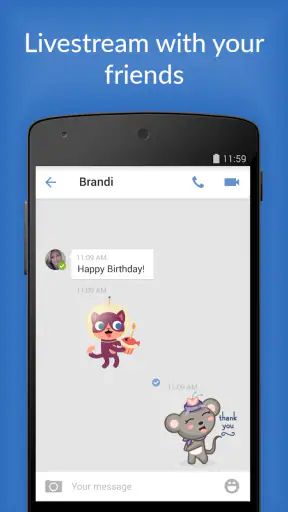
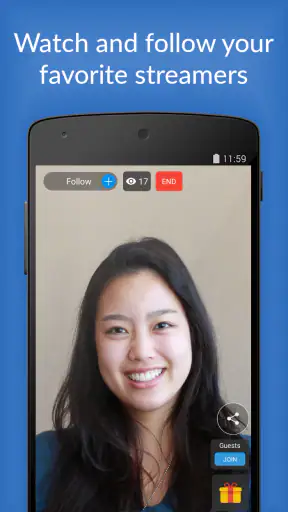
I found imo live most interesting when I stopped treating it as just another social app and looked at what happens around the connection itself. Its appeal depends heavily on being able to reach people in the moment, whether I am checking in from a phone, joining a live social space, or trying to keep a conversation moving while switching between everyday locations. That makes the quality of the experience closely tied to the network, the phone, and the habits of the people I want to contact.
Developed by Baby Penguin, this free social app has grown beyond a small experiment, with more than a million installs and an average rating of 3.6 from roughly 3,200 ratings. Those figures suggest a sizeable audience but also a mixed experience. After spending time with it, I can understand both sides: the app is approachable and built around immediacy, yet its usefulness can fall quickly when a connection becomes unreliable or when the social activity feels too busy.
How imo live feels when the connection is doing the work
The first thing I noticed is that the app makes most sense when I use it as a live social doorway rather than a passive feed. The name and presentation point toward being present and expressive, and the experience rewards users who want interaction to happen now instead of leaving a message and waiting. That can be refreshing if my usual social apps feel overloaded with polished posts, long comment threads, or content chosen mainly by an algorithm.
At the same time, a live-oriented app asks more from the network than a simple text-based service. A short message can survive a momentary delay without changing much. A live interaction is different: pauses become visible, timing can feel awkward, and reconnecting may interrupt the flow. I found that the app is at its best when I have a stable connection and enough attention to participate, not when I am squeezing it into a rushed moment between other tasks.
This is an important distinction for anyone comparing it with familiar social networks. A conventional feed is comfortable when I only want to browse for a few minutes. A messaging app is usually better when the goal is a private, predictable exchange. imo live sits closer to the spontaneous side of social networking, where the value comes from joining the moment rather than simply consuming updates. That gives it personality, but it also makes its weak moments more noticeable.
What changes when I use it on the move
I tested the app mentally against ordinary mobile situations rather than an ideal home setup. On a strong household connection, a live social experience feels straightforward: I can focus on the person or room I am engaging with instead of wondering whether a delay is caused by the app or the network. In a moving situation, the priorities change. A phone may shift between network conditions, background activity may compete for attention, and I may have less patience for repeated loading or interrupted interaction.
That makes this a better companion for a planned break than for a critical conversation. If I am sitting in a café, waiting for an appointment, or taking a quiet evening at home, I can give the app enough concentration to enjoy its social side. If I am walking through a crowded area or trying to multitask, I would choose a simpler communication tool. The app is not a replacement for every kind of contact; it is more suitable when the social moment itself is the point.
One practical habit helped me: I would open it only after deciding what I wanted from the session. A quick check for familiar activity is different from joining a longer live interaction. Without that small decision, it is easy to enter casually and spend more time navigating than actually connecting. This is one of the less obvious trade-offs of a social app built around immediacy: the low barrier to entry is convenient, but it can also make the session feel unfocused.
A realistic everyday scenario
Imagine finishing work and wanting something more social than scrolling through a standard feed, but less formal than arranging a video call. I could open imo live during a short break, look for activity that matches my mood, and stay only while the interaction feels natural. If the connection remains steady, the app can fill that gap nicely because it encourages participation instead of asking me to prepare a polished post.
Now change the situation. I am on public transport, the signal is changing, and I need to keep one eye on a timetable. In that case, the same immediacy becomes a disadvantage. I would rather send a short message through a conventional messenger and return later. The lesson is not that imo live fails on mobile; it is that its best use requires a little more stability and attention than many people expect from a phone-based social app.
Recovering when a live moment breaks
Connectivity failures are especially revealing in this kind of app. When a page or interaction pauses, I first check whether other apps are also struggling. If everything else is working, I close and reopen the relevant part of the experience rather than repeatedly tapping the same control. That simple approach avoids turning a temporary delay into a longer session of frustration.
I also learned not to judge the whole app from one interrupted moment. A weak mobile signal can make any live service look unreliable, and the social cost is higher when the interruption happens during an active exchange. Still, recovery matters. An app designed around live participation should make it easy for me to understand whether I am still connected, whether I need to try again, and whether the interaction has ended. When that status is not immediately clear, uncertainty becomes part of the experience.
For important conversations, I would keep an alternative channel available. This is not because imo live is useless, but because a live social app is the wrong place to depend on a single route when the message truly matters. I prefer to use it for casual contact, discovery, and shared moments, then move to a more familiar private messenger when reliability and continuity are more important than spontaneity.
Another useful recovery habit is to avoid immediately repeating an action after a delay. On a mobile connection, several rapid attempts can create confusion about what actually happened. Waiting briefly, checking the visible state, and then trying once more is less stressful and can prevent duplicate actions. This is a small workflow tip, but it matters more in a service where the network can affect what I see in real time.
Using it without wasting mobile data
Because the app is social and live-oriented, I would not treat mobile data as an unlimited resource. I prefer to use it on a trusted connection when I expect a longer session, especially if I plan to watch or participate in activity that keeps updating. On a phone plan with a tight allowance, short visits are more sensible than leaving the app open in the background while doing something else.
I also recommend paying attention to how long a session lasts rather than assuming that a quick launch means a small data cost. Live interaction can encourage me to stay longer than planned. Setting a personal time limit is useful for two reasons: it keeps data use under control and stops the app from taking over a break that was meant to be brief.
There is a social trade-off here. The most engaging moments are often the least predictable, so a strict data-saving routine can reduce spontaneity. My compromise would be to use the app freely on a reliable home connection and be selective on cellular data. When travelling, I would avoid opening it automatically and wait until I know that a longer session will not create an unwanted surprise on my phone bill.
The app is free to download, but it includes in-app purchases ranging from $0.99 to $199.99 per item. That makes it especially important to understand the difference between enjoying the basic social experience and spending inside the app. I would not make a purchase simply to solve a connection problem or to make a rushed session feel more rewarding. Anyone using the app on a shared device should also be careful around purchase prompts and keep a clear personal limit.
Who will get the most from it
I think imo live suits people who enjoy social discovery and do not need every interaction to be carefully organized. It can be a good fit if I want to meet activity as it happens, express myself casually, and use my phone as a gateway to a more immediate community. The Teen content rating also gives families a useful starting point for deciding whether the style of social interaction is appropriate for a younger user, although I would still encourage parents and teens to discuss privacy, spending, and contact with unfamiliar people.
The app may also appeal to someone who finds standard feeds too passive. Instead of endlessly scrolling through finished content, I can look for a more present-tense experience. That difference is meaningful: the reward is not necessarily a perfect archive of updates, but the feeling that something is happening now. Users who understand that trade-off are more likely to enjoy it.
I would skip it if my main goal is a calm, private, highly dependable conversation. A dedicated messenger is usually the better choice for that. I would also hesitate if I have very limited data, frequently use an unstable connection, or dislike social spaces that may require active participation. In those situations, the network dependency is not a minor inconvenience; it changes the basic value of the app.
Where it stands beside familiar alternatives
Compared with a traditional social network, imo live feels less centered on building a permanent public profile and more centered on immediate engagement. That can make it feel lighter and more spontaneous, but it may also provide less satisfaction to someone who enjoys organizing posts, collecting reactions over time, or carefully controlling how their activity appears.
Compared with a standard messaging app, it is less obviously focused on one-to-one reliability. Messaging tools are designed around sending a clear note and returning to it later. Here, the live element makes timing more important. I would choose imo live when I want social energy; I would choose a conventional messenger when I need a dependable record of what was said.
Compared with a video-focused social platform, its appeal is not simply watching polished clips. The attraction is the possibility of being present in a social setting as it unfolds. That can feel more personal, but it also means the quality depends on who is active and how comfortable I am with less predictable interaction. It is not automatically better than a video platform; it serves a different mood.
Small habits that improve the experience
I recommend beginning with a short session and observing how the app fits my routine before spending money or making it a daily habit. That gives me time to decide whether I actually enjoy the social format or whether I only like the novelty of opening it. Since the average rating is 3.6, I would take that as a reminder to form my own view rather than assuming the large install count guarantees a perfect match.
For a smoother mobile experience, I would use a stable connection for longer interactions, avoid running it casually while multitasking, and keep a backup communication method for anything important. If a session becomes confusing after a network interruption, I would leave and return later instead of repeatedly forcing the same action. These steps do not change the app itself, but they reduce the friction created by its strongest dependency.
I would also treat the Teen rating as a cue for thoughtful use rather than a complete safety judgment. Social apps can expose users to people and conversations outside their immediate circle, so younger users should know how to leave an uncomfortable interaction, avoid sharing sensitive personal details, and ask for help when something feels wrong. Adults can benefit from the same caution, especially when the app encourages quick, informal contact.
My connectivity verdict
After looking at the app through the lens of real mobile use, I see a clear identity. imo live is most enjoyable when I have a stable connection, a few uninterrupted minutes, and a genuine desire to participate in something social. It is less convincing as a universal communication tool because live interaction magnifies every delay, interruption, and moment of uncertainty.
Baby Penguin has created a free social app with a sizeable audience, but the mixed rating reflects a product that will not suit everyone equally. I like its immediacy and the way it can make a spare moment feel more interactive than ordinary scrolling. I am less enthusiastic when the network is unreliable, when the session lacks direction, or when I need the dependable simplicity of a private messenger.
My recommendation is straightforward: try it for spontaneous social moments, preferably on a reliable connection, but do not make it your only communication route. If that balance matches how you use your phone, the app can be a lively addition to your social routine. If you want quiet browsing, strict predictability, or low-data communication, another category of app will serve you better.
Released on December 19, 2019, and still available at no download cost, it is easy to test without committing upfront. I would approach the optional purchases carefully, keep the Teen rating in mind, and judge the experience by the quality of the connections I actually find rather than by the size of its audience. For me, that is the honest conclusion: the app is worthwhile when connectivity supports the social moment, but the connection is also the boundary that defines it.


